Kitchen Remodeling Process and Organization Options
A kitchen remodel isn’t just about improving the look. It’s also an opportunity to enhance functionality and organization. But things can go off track quickly if you dive in without a plan, assuming you’ll make decisions as you go. By approaching your remodel as a well-organized process, you’ll set yourself up for a smoother experience and a final result that actually meets your expectations.
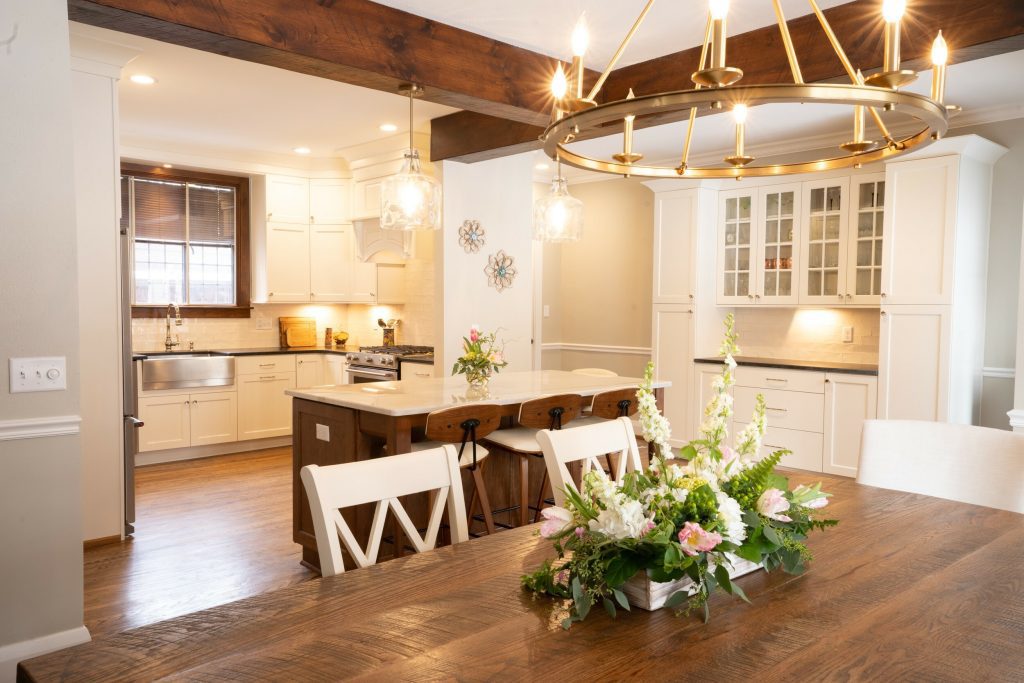
Step 1: Planning and Budgeting
No matter how excited you are about your new kitchen, you need to plan and budget. Before you even call for your first estimate, take time to assess what works and what doesn’t in your current kitchen. Make a wish list of your wants and set clear priorities of your must-haves, nice-to-haves, and if-it’s-in-the-budgets. Is more counter space something you’ve been longer for? Do you want better storage options to keep you organized? Do you feel like your kitchen is dated and want a fresh face lift for a better aesthetic? Are high-end materials important to you? Once you have your list, work on a realistic budget that includes a contingency fund. When you have your wish list and budget, you can start figuring out where to allocate funds, where to splurge, and where to save. Talk with professionals early in the process to get a sense of costs and timelines. Careful planning and budgeting lay the groundwork for a successful remodel and help prevent costly surprises down the road.
Step 2: Design
When you start working on your kitchen design, you’ll find that you need to make a lot of decisions. Even a seemingly minor decision about adding an element or rearranging the appliances can start a ripple effect. You want to find a contractor who’s got solid experience with kitchens, but more importantly, you need a kitchen designer to help you go through and make all the design decisions. Many contractors who work on a lot of kitchens will team up with designers. When you are choosing a contractor, ask about their past collaborations with designers. Having a contractor and a designer who work well together makes the whole process much smoother. They will help you choose a layout that maximizes space. Many homeowners want an open concept, but depending on the existing space, you can do great things even if you want to stick with U-shape, L-shape, or a galley kitchen. Your contractor and designer can help you make the best use of whatever layout you choose. Finally, your kitchen designer will help you settle on a style that reflects your individual taste and flows cleanly into the rest of your home. Modern, traditional, and farmhouse are the most popular options, with some homeowners looking for an eclectic blend. The style you decide on will influence the colors, materials, and finishes you use. Your contractor and kitchen designer can help you create some mock-ups so you feel confident in your design.
Step 3: Professionals and Permits
You’ve figured out what you want, and now it’s time to call in the professionals to take on the heavy lifting. Hiring a general contractor is the best way to keep a renovation project on track. There are many different elements that go into a kitchen remodel. Many kitchen renovations include flooring, painting, electrical work, plumbing work, counter work, and cabinet refacing or installation. That’s a lot of pieces to coordinate, and a contractor can help organize and manage the project so it moves forward without issue. For a kitchen renovation, look for a general contractor who works with a kitchen designer so that you can incorporate all the elements you want in a way that will work with your space. One of the other things you need to make sure to take care of is any construction permits that might be necessary. These depend on what work you are doing, where you live, and other project specifications. Your contractor should be able to guide you through the process, and some contractors will even handle the permitting process as part of their package.
Step 4: Create the Perfect Organizational System for Your New Kitchen
When you’ve chosen the main components of your newly renovated kitchen and you love the new look, it’s time to think about ways to get the best functionality out of the space. Since you’ve just had to empty your drawers and cabinets for the major work, renovation is the perfect time to integrate some new organizational elements into your kitchen.
- Cabinets
You don’t need to completely replace the boxes to work into some new elements. Pull-out shelves, built-in drawer organizers, and Lazy Susans can give you easy access to what you need and allow you to use every inch of cabinet space efficiently. You can even maximize your under-sink storage with built-in organizers and pull-out trash and recycling bins.
- Pantry
When working on your pantry, make sure to choose adjustable shelving. If your needs change over time, you’ll be able to make adjustments easily. Many homeowners also take the opportunity during a renovation to add a countertop, outlets, and built-in organizers to their pantry.
- Vertical Storage
Thinking vertically with your storage can be much more efficient. Wall-mounted racks for hanging pots and pans, magnetic strips for knives, and above-cabinet storage shelves can help free up valuable cabinet and counter space
- Appliance Garage
If you have a slow cooker, stand mixer, air fryer, toaster, coffee maker, and other appliances taking up counter space and making your kitchen feel cluttered, consider installing an appliance garage. It keeps your tools easily accessible when you need them, but out of sight when you don’t.
A skilled kitchen contractor can work with your wish list and budget to create the kitchen you’ve always wanted. When your kitchen is fresh, functional, and well-organized, it becomes a space you genuinely enjoy spending time in. If you’re ready to transform your kitchen into a personalized space that fits your family’s needs, start by building your wish list and find a contractor who can bring your vision to life.
Ready to get started? Contact Total Quality Construction today to schedule a consultation and take the first step toward your dream kitchen.